
What Building Bathrooms in Hampstead Teaches You About Small Spaces
Most bathroom ideas look easy when you first see them online. A freestanding bath, a separate shower, large-format finishes, clean lines, open space. The problem is that many real bathrooms in Hampstead do not begin with open space. They begin with tighter proportions, older layouts, awkward corners, and practical limits that change what actually works.
That is where experience matters. A bathroom should not be built around an idea that looked good on a screen. It should be built around the room you actually have.
The Gap Between Inspiration and Reality
A lot of bathroom ideas now come from Pinterest, Instagram, reels, and finished project galleries. That is not a bad thing in itself. It gives people a clearer sense of style, materials, and what they are drawn to.
But most of those images are shown under ideal conditions.
The rooms are often larger. The layouts are cleaner. The windows, walls, and proportions are easier to work with. There is more freedom in how the fixtures are positioned, how the room is balanced, and how the final result is photographed.
That is not how many real bathrooms in Hampstead begin.
A lot of them sit inside period homes, conversions, and older properties where the room already comes with its own limits. The footprint may be tighter. The walls may not be where you would choose them to be. The window position may affect the layout. The proportions may be awkward. And once all of that is taken seriously, the room has to be planned around what works in reality, not around what looked good in a larger space elsewhere.
That is often the real difference between inspiration and experience.
The Reality of Hampstead Bathrooms
Many bathrooms in Hampstead are not generous, open-plan spaces. They are practical rooms inside older homes that were not originally designed around modern bathroom layouts.
That brings real constraints.
Sometimes the room is simply smaller than expected once it is measured properly. Sometimes the shape of the room limits where fixtures can go. Sometimes a wall, a window, a door position or an existing route for services immediately starts narrowing the realistic options. In other cases, the room may technically accept more items, but only at the cost of movement, storage, balance or ease of use.
That matters because a bathroom does not need to just look finished. It needs to work every day.
This is especially true on projects like bathroom renovations in Hampstead, where the room often needs to be adapted carefully rather than filled aggressively.
When Good Ideas Are Copied Too Literally
This is where people often get caught out.
An idea can be attractive and still be wrong for the room.
A freestanding bath may look great in a larger bathroom, but in a tighter room it can start taking up the breathing space the layout needed elsewhere. A separate shower enclosure may feel like an upgrade in theory, but once it is fitted alongside the bath, basin, WC and towel rail, the room can start feeling busy even when every element is finished well.
The same applies to tile choices, basin sizes, storage expectations and the overall amount someone is trying to fit into the room.
The issue is usually not one item on its own. It is the cumulative effect.
That is why the right question is not just Can it fit?
It is What will the room feel like once it is all in?
What Actually Works in Small Spaces
What works in smaller Hampstead bathrooms is usually not the most ambitious layout on paper. It is the layout that gets the balance right.
That means thinking in terms of proportion, circulation, fixture size, visual weight, and how the room will actually be used once it is finished.
A good small bathroom usually works because:
the room still has enough open floor area to feel comfortable
the key fixtures are scaled properly for the footprint
movement through the room feels natural
the layout does not force every wall to carry too much
the finished result feels calm rather than crowded
Sometimes that means choosing a better-sized basin instead of the smallest one that can technically be squeezed in. Sometimes it means understanding when a freestanding bath will suit the room and when it will take too much back in return. Sometimes it means knowing that a compact walk-in shower in Hampstead will give a better result than forcing both a bath and a separate shower into a room that cannot comfortably support them.
Sometimes it means understanding that family bathrooms in Hampstead need to work for storage, daily use and easy movement, not just for a good photo.
And on more technical layouts such as wet rooms in Hampstead, the same logic applies in a different way. The idea still has to suit the room. The room should not be bent out of shape just to imitate an image.
A well-planned bathroom works with the space. It does not fight the space.
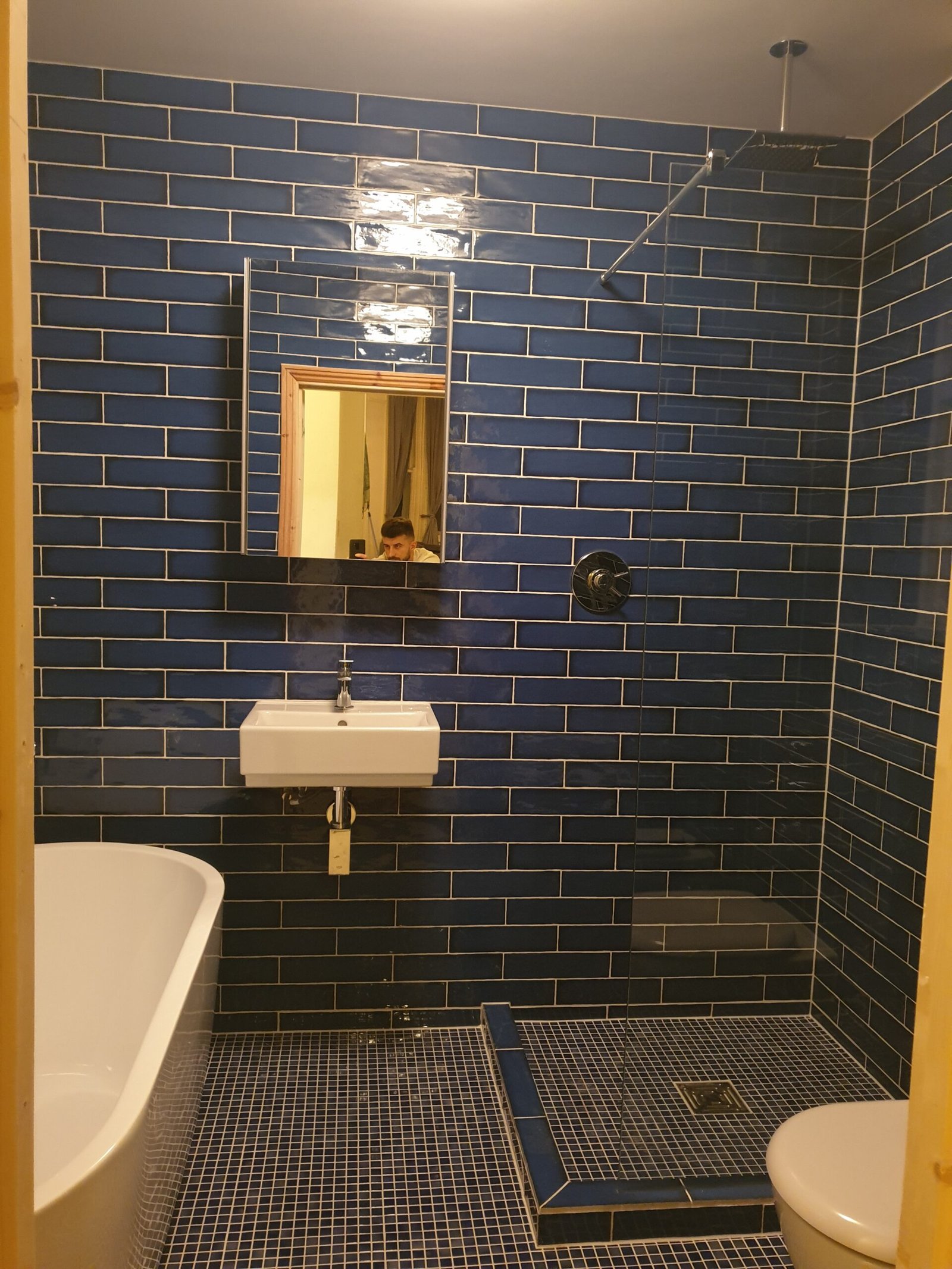
These kinds of layouts are useful examples because they show something important.
A room can still be finished well and still prove the point that layout decisions matter.
The issue is not whether the work was done properly. The issue is what the room is being asked to carry. In a tighter footprint, every extra feature starts making a claim on the same limited space. The result may still look attractive, but the room gives something back in return. Usually that is movement, storage, visual calm, or a stronger sense of balance.
That is where judgement matters more than inspiration.
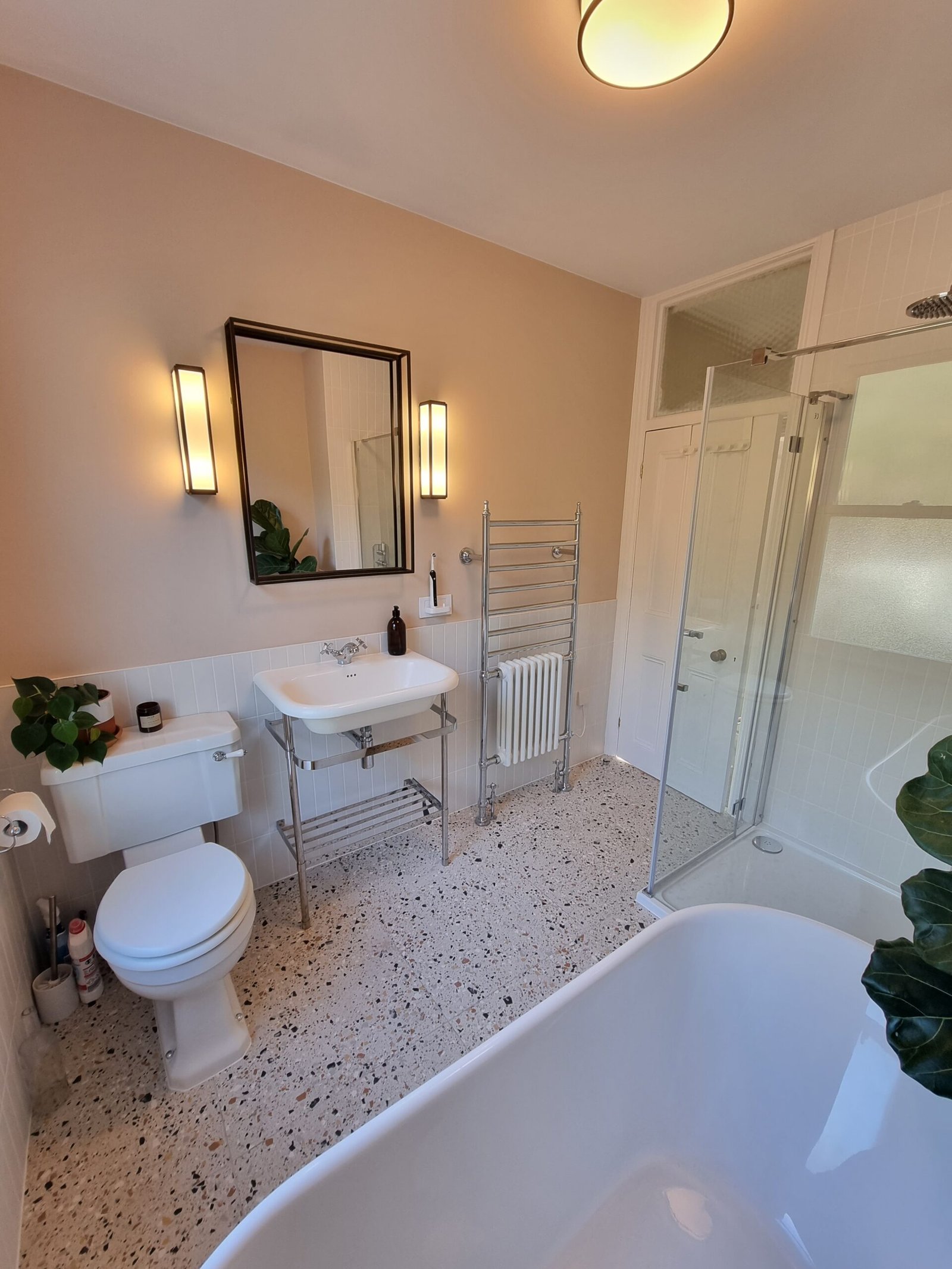
The contrast is what matters.
A larger room can accept more without becoming crowded. The same idea that feels tight in one bathroom can feel natural in another because the room has enough width, depth, or cleaner proportions to support it properly.
That is the part online inspiration rarely explains.
It shows the finished combination, but not whether the room had the right conditions for it in the first place.
The layout is not good just because the fixtures are expensive or because the final photo looks polished. It is good when the room still feels comfortable after the decisions have been made.
The Mistakes That Usually Make Small Bathrooms Feel Smaller
The most common mistakes usually come from trying to copy a visual idea too literally.
That can show up in a few ways.
One is trying to fit too many features into one room simply because each one looked appealing on its own. Another is choosing fixtures that technically fit but are not properly scaled to the space. Another is forgetting how important tile planning is to the overall feel of a smaller room. A tile can be beautiful in isolation and still feel heavy, busy or badly judged once it is set inside a tighter layout.
This is where good tiling work matters too. Tile size, joint pattern, direction and overall layout all affect how a room reads once it is finished. In smaller spaces, those decisions show more quickly.
Another mistake is focusing only on the statement piece.
Sometimes all of the attention goes to the bath, or the shower, or the finish, while the practical working parts of the room are left to solve themselves later. That is usually when the layout starts losing control.
Small bathrooms do not usually fail because of one dramatic mistake. They often fail because several small planning decisions were never properly challenged at the start.
What This Should Tell You About the Person Building It
This is where it becomes useful as a filter.
A good bathroom fitter is not just someone who can install what has been chosen. A good bathroom fitter understands how to adapt an idea to the room in front of him.
That means being able to say:
- this can work well here
- this can fit, but it will tighten the room too much
- this would be better resized
- this layout needs rethinking before it becomes awkward
- this room needs a more practical answer than the image you started from
That is not about saying no for the sake of it. It is about protecting the result.
The real value is not in forcing a room to match an idea. It is in understanding how to translate the idea into something that still works once the room is finished and lived in.
That is also why technical judgement matters. On projects involving en-suite bathrooms in Hampstead, wet rooms, family bathrooms or tighter shower-led layouts, the layout has to be thought through as part of the build, not treated as an afterthought once the fittings arrive.
That same point runs through how to choose the right bathroom company in Highgate and choosing a bathroom company in 2026. The finish matters, but it is never the whole story. The reasoning behind the layout matters too.
A good bathroom is not defined only by how it looks in a photo. It is defined by how well it works in the space it was built in. That is why the best bathroom decisions are rarely about copying an idea exactly as it appeared online. They are about understanding the room properly, knowing what to keep, what to adapt, and what the space will genuinely support.